I. New Phase of WAPS Maturity: The Maritime Technologies Forum Publishes Safety Management System Guidelines
In 2026, the global fleet reached the milestone of 100 vessels equipped with more than 230 individual WAPS units, collectively saving over 100,000 tonnes of CO₂ emissions each year. As wind propulsion becomes an increasingly established part of commercial shipping, industry attention is shifting beyond installation toward its safe and efficient integration into daily operations.
Reflecting this new phase of maturity, the Maritime Technologies Forum (MTF) has published comprehensive guidelines to support the integration of WAPS into ships' Safety Management Systems (SMS). This article explores the key messages from the MTF guideline through the three pillars of a Safety Management System: People, Operations, and Management.
These principles imply that safe WAPS operations should be easy to operate, maintain, and integrate into established shipboard practices – OceanWings helps shipowners integrate wind-assisted propulsion into their Safety Management Systems with confidence, supporting safe and efficient operations throughout the vessel's service life.
II. Safe Operations Start with Well-Prepared Crews – People
The MTF guideline encourages operators to identify the competencies required for different roles, both onboard and shore-based. For example, deck personnel, bridge personnel, and engineering personnel each have different responsibilities, and therefore different training, related to WAPS.
III. Integrating WAPS into Everyday Vessel Operations – Operations
Beyond crew competence, the MTF guideline highlights the importance of integrating WAPS into the vessel's day-to-day operational procedures. It recommends that operators identify and monitor shipboard operations affected by WAPS. Taking into account the vessel's design, the type of WAPS, its operational profile, and trade routes, the procedures and allowable weather conditions for safe operation should be tailored to each vessel.
The guideline also considers emergency situations, including system malfunctions, the loss of manual override, severe weather, and other abnormal conditions. By incorporating WAPS-specific emergency response procedures into the Safety Management System and conducting drills and exercises, operators can help ensure the safety of the ship and its personnel while strengthening navigational integrity.
IV. Supporting Safe Performance throughout the Vessel's Lifecycle – Management
The guideline recommends ensuring that manuals, operating procedures, maintenance instructions, and risk assessments remain aligned with the vessel's current WAPS configuration, evolving regulations, supplier guidance, and industry best practices.
In addition, as with any critical shipboard system, changes should be carefully assessed before implementation to evaluate how they may affect vessel operations, crew responsibilities, and safety management. In this way, WAPS is integrated into the vessel's existing Management of Change process.
V. Safe by Design: How OceanWings Supports Operational Excellence
The key message of the MTF guideline is that the safe adoption of Wind-Assisted Propulsion Systems depends on integrating people, operations, and management into a coherent Safety Management System. In other words, safe WAPS operations should not rely on additional complexity, but on systems that are easy to operate, maintain, and integrate into established shipboard practices.
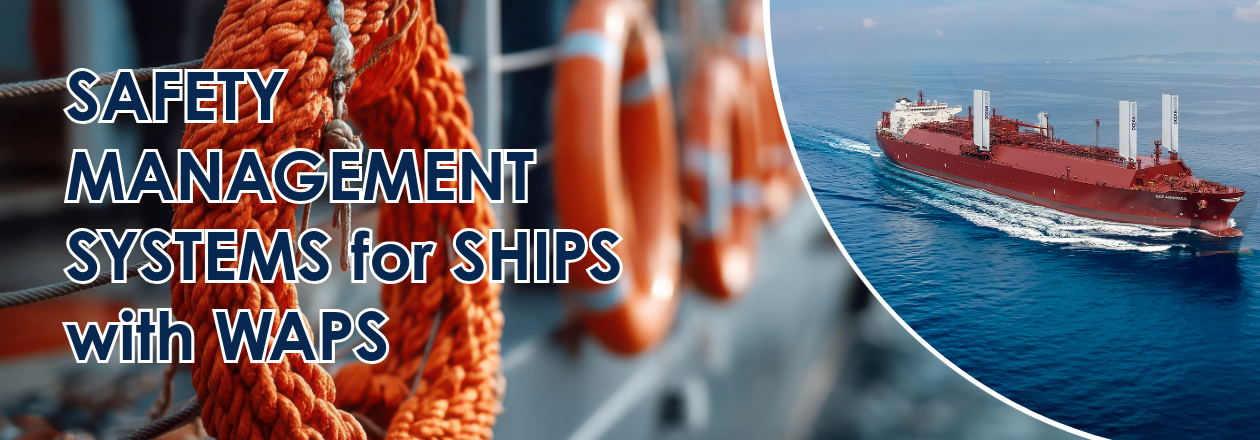
OceanWings is specifically designed with this philosophy in mind. Its actuated feather mode enables ships to withstand harsh marine environmental conditions, including extreme apparent wind speed of up to 100 knots. The system is fully automated, meaning that it does not require additional crew or extensive training.
OceanWings also generates no noise or vibration, requires extremely low power, and has been engineered for minimal maintenance thanks to its simple and reliable design. The first review, conducted jointly with the shipowner after two years of service of Canopée, demonstrated an operational availability rate of 99.6%.
By combining a safe-by-design architecture with high operational reliability and low maintenance requirements, OceanWings helps shipowners integrate wind-assisted propulsion into their Safety Management Systems with confidence, supporting safe and efficient operations throughout the vessel's service life.
To know more about OceanWings, visit www.oceanwings.com
Reference
Maritime Technologies Forum (MTF). (January 2026). Guidelines to Develop and Implement a Safety Management System for Ships Using Wind-Assisted Propulsion Systems. Guidelines to Develop and Implement a Safety Management System for Ships Using Wind Assisted Propulsion Systems